
You don't need a factory to start your own cosmetics brand. Today, many successful brands manage the product idea, brand identity and sales channel themselves while having production done by contract manufacturers. But not needing a factory does not mean the process is easy: steps taken in the wrong order turn into lost time, money and stock.
In this article, we go through the steps of building a cosmetics brand in order, from the idea stage to your first batch reaching the shelf.
1. Define your target audience and your product
"A cream for everyone" is not a brand. The first question should be: who is it for, and what problem does it solve? An intensive moisturizer for women with dry skin, a simple beard care set for men, or branded liquid soap for hotels and cafés?
That answer determines the product's ingredients, packaging, price and where it will be sold. Launching with one or two hero products instead of a broad range at the start reduces both stock risk and the workload you have to manage.
Which product category should you start with?
- Shampoo, shower gel, conditioner: Fast-moving products that customers buy again and again.
- Liquid soap, hand gel: Well suited to corporate and hotel sales and open to high-volume orders.
- Cream, lotion, serum: High brand value and price margin, but also high expectations for packaging and ingredients.
- Cologne, perfume, spray: Well suited to gift and set sales.
2. Decide on your formula
There are two routes for the product's contents: have your own formula developed by a cosmetic chemist, or choose one of a manufacturer's existing formulas and sell it under your own brand. The second route is known as "private label" or "white label" and is faster. The first gives you a more original product but takes time and development costs.
Whichever route you choose, clarify in writing who owns the formula and who will produce the bulk product.
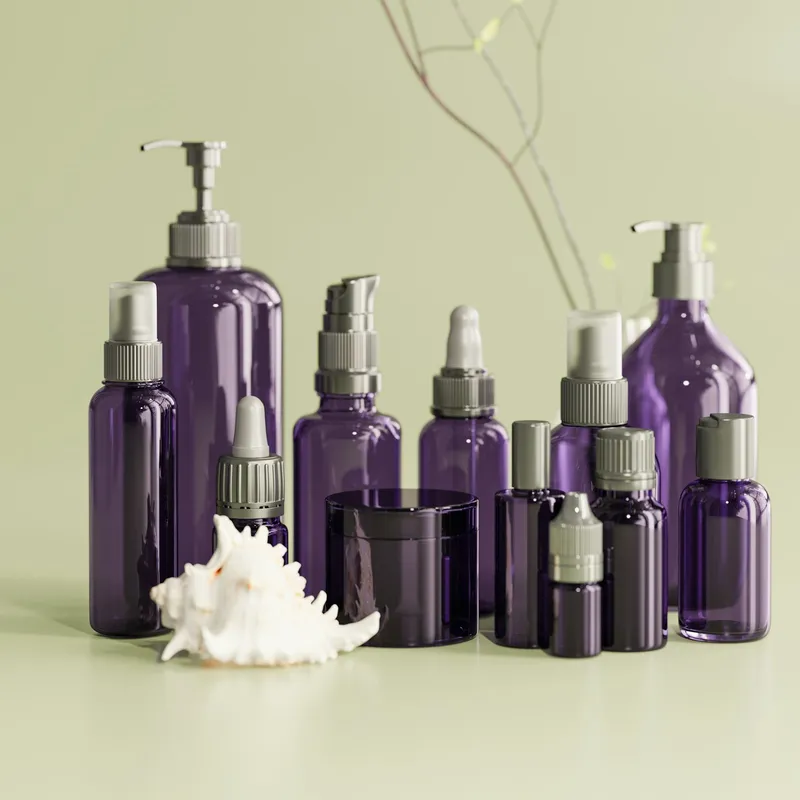
3. Choose your packaging
Packaging is the consumer's first contact with the product and determines your brand's place on the shelf. When choosing it, look beyond appearance to the following:
- Compatibility with the product. A thick cream won't come out of a narrow-neck bottle; an alcohol-based product is not compatible with every plastic.
- Cap and pump. The pump must suit the product's consistency, and the cap must not leak.
- Suitability for the filling line. Packaging with highly unusual shapes runs slowly on the machine and raises the unit cost.
- Continuity of supply. Will you be able to find the packaging you sourced for the first batch again for the second?
Choosing your packaging in consultation with the company that will fill the product prevents the most common mistakes.
4. Prepare your brand identity and label
The brand name, logo, colors and label design are finalized at this stage. Once you have chosen a brand name, don't neglect to check its registration status with the Turkish Patent and Trademark Office and to file your application early. Finding out you can't use the name after the labels are printed is an expensive lesson.
A cosmetic label is not just a design job. There is mandatory information that must appear on the label, such as the ingredient list, nominal quantity, batch number, shelf life or period after opening, usage warnings and the name and address of the responsible person. Before sending the design to print, make sure this information is complete and legible.
5. Plan the legal steps
In Turkey, cosmetic products are regulated under the Turkish Cosmetics Regulation. Within the general framework, the following steps stand out:
- Responsible person. The person or company that places the product on the market and is responsible for its regulatory compliance is designated. A company selling its own brand usually carries this responsibility.
- Product information file and safety assessment. A file covering the product's ingredients, safety and label information is prepared by a qualified assessor.
- ÜTS notification. The product is notified to the Product Tracking System (ÜTS) before it goes on the market.
Because regulations are updated from time to time, we recommend checking the current announcements of the Turkish Medicines and Medical Devices Agency (TİTCK) for details and, if needed, working with a consultant who specializes in this area. This article is not legal advice.
6. Choose your production partner
Once your formula, packaging and label are ready, it's time to fill, label and package the product. At this point, working with a contract company lets you start production without investing in machinery or a production line. We explain how contract manufacturing works in our article what is cosmetic contract manufacturing, and what to look for when choosing a company in 10 questions to ask when choosing a contract filling company.
For your first production run, the most important factor is the minimum order quantity. Starting with a high quantity while demand is still uncertain means stock sitting in a warehouse. It is healthier to start with small batches and grow based on sales data.
7. Keep your first batch small and approve a sample
Before full production, check the following on a sample:
- Is the fill level consistent?
- Do the cap and pump leak?
- Is the label straight, bubble-free and correctly aligned?
- Does the product sit properly in its box?
A problem spotted on a sample can be fixed in a few minutes. If the same problem is noticed in a batch of thousands of units, the cost becomes very large.
8. Prepare your sales channel
Your sales channel should be ready before the product reaches the warehouse: your own e-commerce site, online marketplaces, social media, pharmacies and cosmetics stores, or corporate sales. The channel also affects the packaging format. In e-commerce, the product needs to survive shipping; in retail, the box's appearance on the shelf comes first. You can find packaging options on our contract packaging page.
Common mistakes
- Starting with too many products. Every new product means a separate formula, packaging, label and stock.
- Choosing packaging without consulting the filling company. A pump or cap that later turns out to be incompatible holds up the whole batch.
- Printing labels without a regulatory check. Missing information may mean the labels have to be reprinted from scratch.
- Starting with a high quantity. Unsold stock ties up capital, and the product's shelf life keeps running.
- Postponing trademark registration. If the name turns out to belong to someone else, the entire design has to be redone.
Summary
Building a cosmetics brand means bringing together the right target audience, a clear product, compatible packaging, a regulation-compliant label and a reliable production partner. It is possible to start with small batches and grow with sales, without building a factory.
At Velioğlu Kozmetik, we fill, label and package products for brands. We work with batches starting at 1,000 units and can deliver up to 15,000 units per day. Get in touch to talk about your product and packaging.