
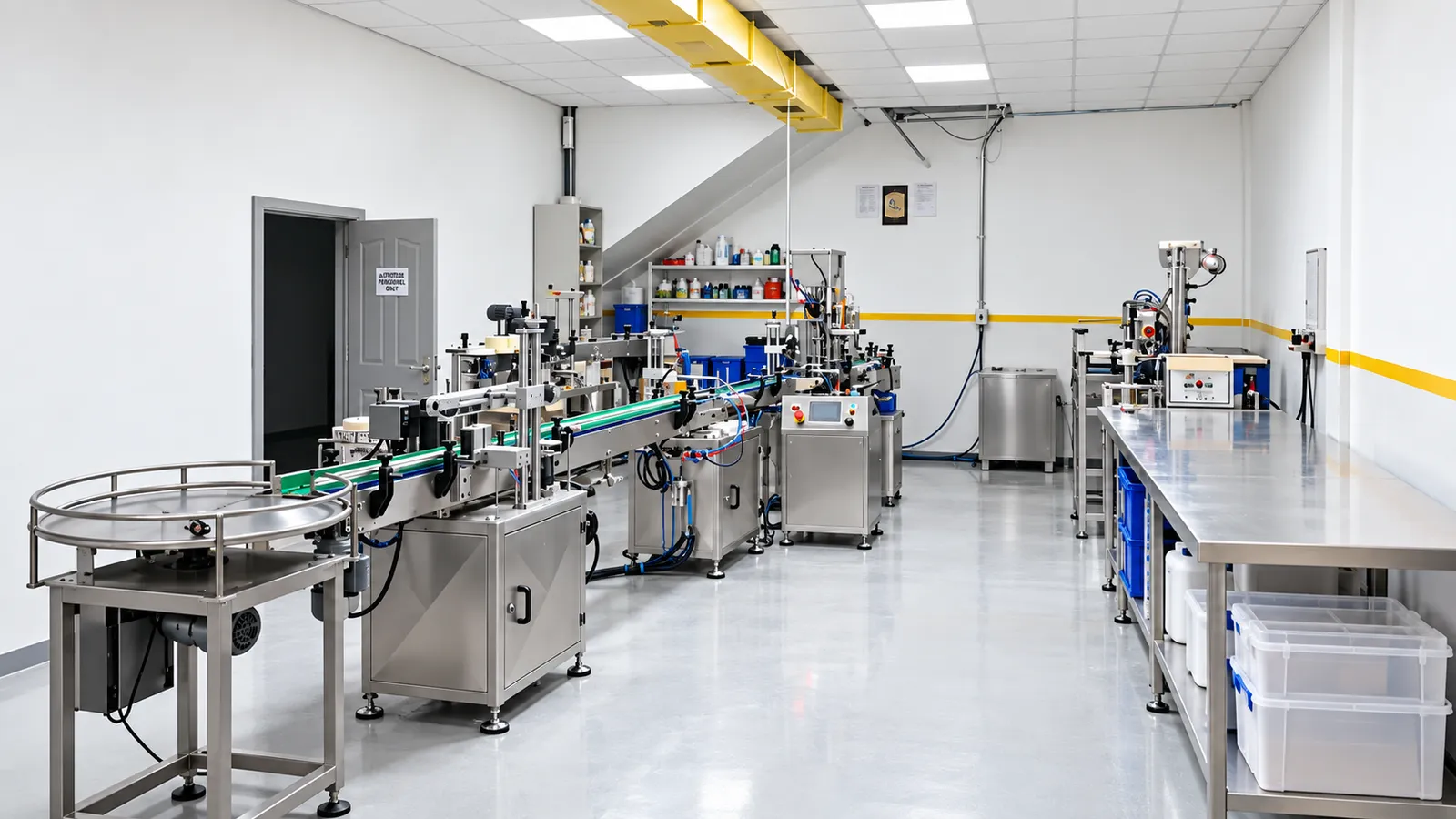
Choosing a contract filling company means deciding who you will trust with your brand's product. The wrong choice comes back as late deliveries, leaking packaging, crooked labels and, worst of all, defective products that have already reached your customers. The good news: if you ask the right questions up front, you can rule out most of these risks in the very first meeting.
Below you'll find ten questions we recommend asking before you start working with a cosmetic filling company, and why each one matters.
1. Which product categories do you fill?
Not every filling line suits every product. A water-thin cologne, a foaming shampoo and a thick cream call for different filling methods. Ask whether the company has done work similar to your product before.
What to look for: An answer that names specific product categories is more reassuring than "we fill everything."
2. Which packaging types can you work with?
Bottles, tubes, jars, pump and spray packaging; round, oval or square bodies. Find out whether the packaging you have chosen runs smoothly on the company's line. If possible, bring a few samples of your packaging.
What to look for: If your packaging isn't decided yet, whether the company can guide you in choosing it is also a major plus.
3. What is your minimum order quantity?
For a new brand, this question is decisive. If the minimum quantity is high, you have to risk a large stock before demand is clear. Being able to start with small batches and grow with sales protects your cash flow.
What to look for: Also ask whether the minimum applies per product or per total order.
4. What is your daily capacity?
Capacity shows whether the company can keep up with you as you grow. Today you may be ordering 2,000 units; six months from now, when you need 20,000 units, looking for another company means a new setup and a new sampling process.
What to look for: Ask whether the capacity is realistic and how orders are scheduled during busy periods.
5. Do you also handle labeling and packaging?
Having filling done in one place, labeling in another and packaging in a third adds transport, waiting and damage risk at every stage. Doing all three in the same facility means the product comes out ready to ship in one go.
What to look for: Ask whether labeling is done by hand or by machine. Keeping the same alignment on every unit in a batch of thousands is only possible with a machine.
6. Do you produce samples or trial runs?
Seeing the fill level, cap seal, label alignment and packaging on a sample before the large batch prevents surprises. A problem caught on a sample is fixed within minutes.
What to look for: Ask how the sampling process works, whether it is charged, and whether production ever starts without your approval.
7. How is quality controlled throughout the batch?
It isn't enough for the first unit to come out well; the ten-thousandth unit must be the same. Ask how fill quantity, cap tightness and label alignment are checked throughout the batch.
What to look for: How defective units are separated and how counting is done at delivery shows how seriously the company takes its work.
8. Who supplies the packaging and labels?
Some companies only work with the materials you bring, while others also help with sourcing packaging. Where the materials come from determines the price, the lead time and who is responsible when a problem arises.
What to look for: Ask how far in advance materials need to reach the company and how the allowance for waste is calculated.
9. What documents do you hold, and how are legal responsibilities divided?
For cosmetic products, regulatory compliance is one of the brand's most important responsibilities. Discuss openly which documents the company holds and how obligations such as the product information file, safety assessment and ÜTS notification will be divided. Which documents you need depends on which stages the company takes on.
What to look for: A company that can say "we do this, and that is your responsibility" instead of giving vague answers prevents confusion down the road. Follow TİTCK announcements for the current rules.
10. How do repeat orders work?
The first order is just the beginning. What really matters is that the second and third orders arrive at the same quality as the first, and faster. Ask whether the company saves your product's settings and whether it can continue with the same setup on repeat orders.
What to look for: Communication is part of this question too. Who you can get your order status from, and how quickly, is decisive in a long-term partnership.
Bonus: see the facility
If possible, visit the company. An hour-long visit tells you more about the facility's organization, cleanliness, the condition of the machines and the staff's approach to their work than long email exchanges.
What to bring to the meeting
- A short description of your product and its consistency (or a sample)
- Packaging samples or your packaging idea
- Your label design or a draft
- Your target quantity for the first batch and your forecast for the following months
- Your packaging expectations: individual boxes, sets or cartons only?
A brand that comes with this information gets a more accurate quote and saves time at every stage of the process. If you're curious about how contract manufacturing works in general, read our article what is cosmetic contract manufacturing; if you're building a brand from scratch, take a look at starting your own cosmetics brand.
You can ask us these questions too
At Velioğlu Kozmetik, in our facility in Esenyurt, İstanbul, we provide filling, machine labeling and packaging for shampoos, shower gels, conditioners, liquid soaps, hand gels, creams, lotions, serums, colognes and sprays. We work with batches starting at 1,000 units and can deliver up to 15,000 units per day. We offer all three services together or separately. To get answers to the questions above, contact us.